
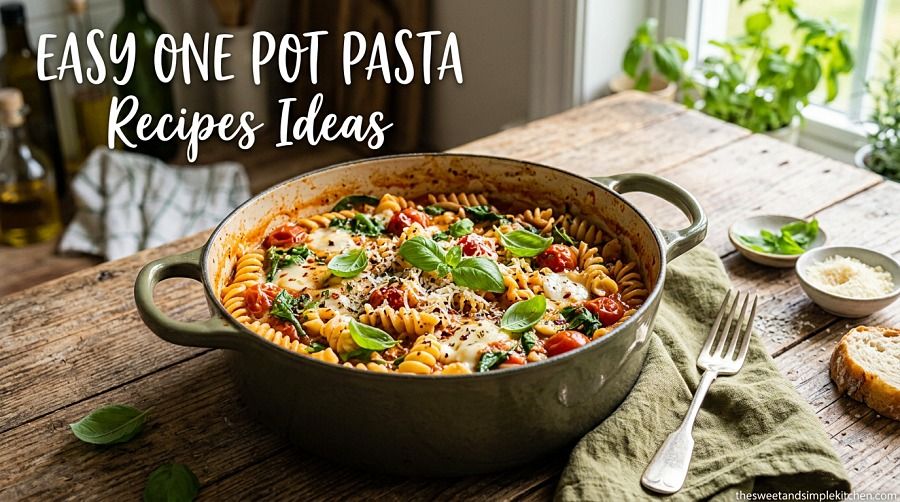
In the fast-paced ecosystem of modern living, culinary efficiency has become as critical as software optimization. For tech professionals, developers, and busy innovators, time spent on elaborate meal preparation often competes with debugging, sprint planning, and deep-focus work cycles. Enter the one-pot recipe: a systematic approach to cooking that minimizes cleanup, maximizes flavor integration, and streamlines the entire cooking workflow. This article explores the technical methodology behind one-pot cooking, offering structured recipes and strategic insights for optimizing your kitchen operations.
The Architectural Logic Behind One-Pot Cooking
One-pot cooking is not merely about using fewer dishes; it is a culinary framework built on the principle of sequential layering. By controlling the order of ingredient introduction, you achieve a depth of flavor that would otherwise require multiple pans and a complex reduction process. From a systems perspective, this method reduces the “operational overhead” of cooking—fewer tools, less energy consumption, and a linear execution path. The result is a high-throughput, low-latency meal preparation system that aligns perfectly with the demanding schedules of tech professionals.
Additionally, the one-pot approach inherently supports macros-based meal planning. You can easily compute caloric density and nutrient distribution within a single vessel, allowing for precise dietary tracking without the complexity of multiple components. This makes it an ideal strategy for those who treat their bodies as high-performance hardware that requires consistent, quality fuel.
Core Principles for Optimal One-Pot Execution
To master this cooking paradigm, you must adhere to several key technical protocols. These principles ensure that your final output is consistently reliable, regardless of the recipe complexity.
- Thermal inertia management: Use a heavy-bottomed pot (e.g., Dutch oven or deep stainless steel skillet) to maintain stable temperature. This prevents scorching and enables even heat distribution, much like a well-managed load balancer.
- Layered ingredient sequencing: Start with aromatics (onions, garlic, ginger) to build a flavor base. Follow with proteins (which need longer cooking times) and then hard vegetables, finishing with quick-cooking items like leafy greens or grains.
- Moisture control: Your liquid ratio is the critical environment variable. Too much liquid yields a soupy result; too little causes burning. A standard rule is 1.5 to 2 cups of liquid (broth, water, or canned tomatoes) per 1 cup of dry grains or legumes.
- Resting period: After removing the pot from heat, allow the dish to rest for 5-10 minutes. This redistribution of moisture (“carryover cooking”) allows flavors to integrate and thickens the final texture, similar to a post-deployment stabilization period.
Three High-Performance One-Pot Recipes
Below are three tested recipes optimized for different dietary requirements and taste profiles. Each has been designed for minimal active time and maximal flavor output.
1. System-Level Chicken and Wild Rice Skillet
This recipe is the equivalent of a “monolithic” application—robust, self-contained, and exhaustive. It provides complete protein, complex carbohydrates, and fiber in a single deployment.
- Ingredients: 4 chicken thighs (bone-in, skin-on), 1 cup wild rice blend, 2 cups low-sodium chicken broth, 1 cup sliced mushrooms, 1 diced shallot, 3 cloves minced garlic, 2 tbsp olive oil, 1 tsp dried thyme, salt, and black pepper.
- Execution: Heat olive oil in a large pot over medium-high heat. Season chicken with salt and pepper, then sear skin-side down for 5-6 minutes until golden. Remove chicken and set aside. In the same pot, sauté shallot, garlic, and mushrooms for 3 minutes. Add wild rice and thyme, toasting for 2 minutes. Pour in broth and bring to a boil. Nestle the chicken back into the rice mixture. Reduce heat to low, cover, and cook for 35-40 minutes. Let rest for 5 minutes before serving.
2. Zero-Dependency Mediterranean Shrimp and Orzo
A lightweight “microservice” approach: quick to build, fast to execute, and elegantly simple. This dish is perfect for post-work recovery or a light yet satisfying dinner.
- Ingredients: 1 lb large shrimp (peeled, deveined), 1 cup orzo pasta, 2 cups vegetable broth, 1 can (14 oz) diced fire-roasted tomatoes, 1 cup chopped spinach, ½ cup crumbled feta, 2 tbsp capers, 3 cloves garlic (sliced), 2 tbsp butter, 1 tsp dried oregano.
- Execution: Melt butter in a large skillet over medium heat. Add garlic and oregano, cooking until fragrant (30 seconds). Add orzo and toast lightly, stirring for 2 minutes. Add broth and tomatoes; bring to a simmer. Cover and cook for 10 minutes, stirring occasionally. Add shrimp, spinach, and capers. Stir, cover, and cook for an additional 5-6 minutes until shrimp are pink and opaque. Remove from heat, then fold in feta cheese.
3. Bulk-Compile Vegetarian Lentil and Sweet Potato Stew
Designed for batch cooking (meal prep), this recipe scales linearly and stores exceptionally well. It offers high satiety and a strong nutritional profile, ideal for sustained cognitive performance.
- Ingredients: 1.5 cups dried green or brown lentils (rinsed), 2 large sweet potatoes (cubed), 1 large yellow onion (diced), 4 carrots (sliced), 4 cups vegetable broth, 1 can (15 oz) coconut milk, 2 tbsp red curry paste, 1 tbsp fresh grated ginger, 3 garlic cloves (minced), 1 lime (juice), fresh cilantro for garnish.
- Execution: In a large pot, sauté onion and carrots in a splash of broth for 5 minutes until softened. Add garlic, ginger, and curry paste; cook for 2 minutes. Add lentils, sweet potatoes, and vegetable broth. Bring to boil, then reduce to simmer. Cover and cook for 25 minutes, or until lentils are tender. Stir in coconut milk and lime juice; season with salt. Simmer uncovered for 5 more minutes to thicken. Serve with fresh cilantro.
Comparative Nutritional and Efficiency Table
The table below provides a rapid overview of the key performance metrics for each recipe, allowing you to make an informed decision based on your macros and time budget.
| Chicken & Wild Rice | 50 minutes | 620 | 42 | 55 | 28 | 1 pot, 1 cutting board |
| Shrimp & Orzo | 30 minutes | 510 | 35 | 48 | 19 | 1 skillet, 1 knife |
| Lentil & Sweet Potato | 45 minutes | 480 | 20 | 72 | 16 | 1 pot, 1 spoon |
Advanced Optimization: Batch Cooking and Freezer Management
To fully leverage one-pot cooking, consider implementing a “cook-serve-freeze” cycle. The lentil stew and chicken rice both freeze exceptionally well (up to 3 months) without significant textural degradation. Portion the recipe into vacuum-sealed bags or airtight glass containers immediately after cooling. Then, label each container with the dish name, date, and caloric content using a permanent marker or a QR code linked to your meal database. This transforms your cooking session into a deferred deployment, providing ready-to-eat meals that require only reheating (2-3 minutes in a microwave or 10 minutes in a sous-vide bath).
Furthermore, you can “containerize” your recipes by pre-measuring dry ingredients into jars or ziplock bags. This is the culinary equivalent of a build manifest. When you are ready to cook, you simply dump the pre-configured batch into your pot, add the required liquid, and execute. This reduces active cooking time by up to 40% and eliminates decision fatigue during the week.
In conclusion, one-pot cooking is a high-leverage skill for anyone operating under tight time constraints. By adopting these structured methodologies, you can reclaim significant time, reduce wasted energy, and maintain a consistent, nutritious diet—all while spending minimal time on the most tedious task: dishes. Optimize your kitchen process and, in turn, optimize your life.